
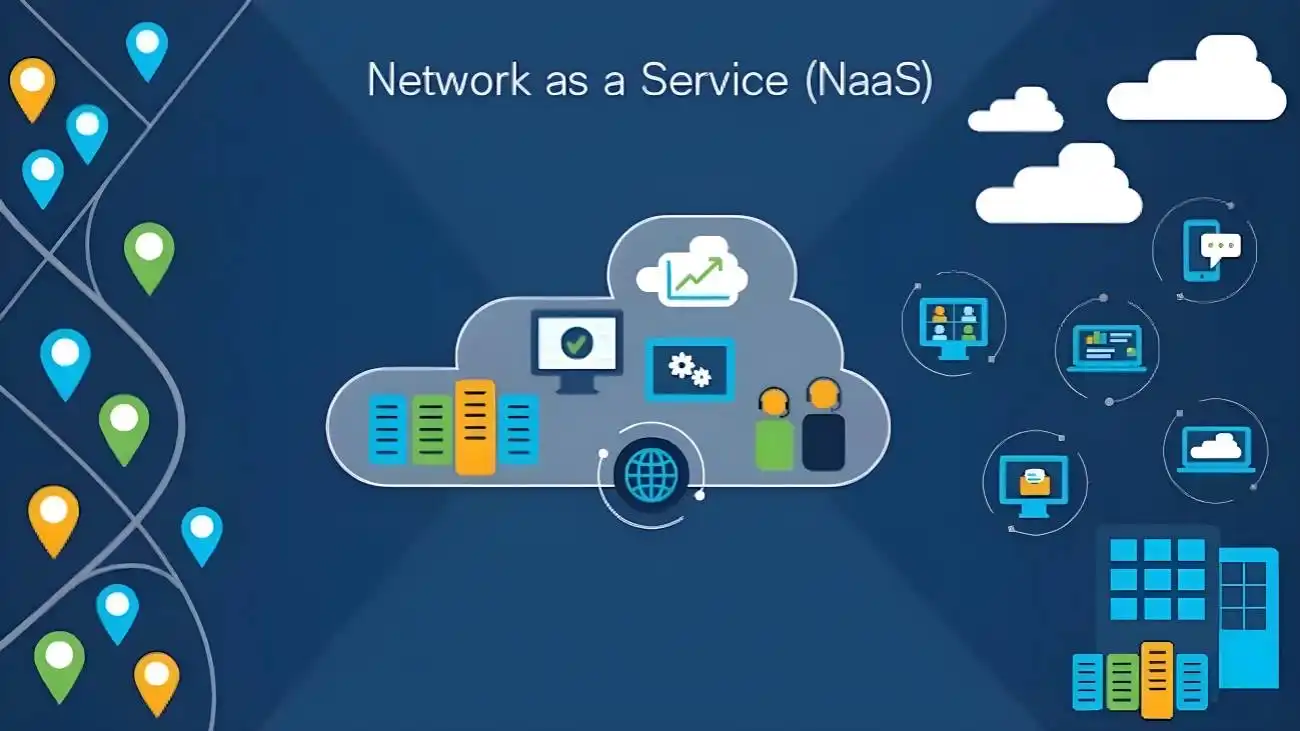
Most IT teams inherit a collage of boxes, licenses, and scripts that grow harder to manage every quarter. Network as a Service (NaaS) platforms replace that sprawl with a managed, subscription-based fabric that unifies routing, switching, Wi-Fi, security, monitoring, and lifecycle. The result: higher uptime, faster rollouts, and clearer accountability. For custom integrators (CIs), NaaS also creates predictable recurring monthly revenue (RMR) without standing up a 24/7 NOC.
A NaaS platform standardizes the network stack. Controllers enforce golden configurations across sites; zero-touch provisioning brings new hardware online in minutes; policy templates apply identity-aware access and segmentation consistently. Because the platform abstracts device quirks, upgrades become routine instead of disruptive projects.
NaaS bakes in SD-WAN for link aggregation, dynamic path selection, and forward error correction—so voice and video ride the best path without manual tinkering. On Wi-Fi, cloud controllers manage channel plans, band steering, and load balancing; client experience metrics (RSSI/SNR, retransmissions, roaming time) surface root causes quickly.
Identity and posture drive access. With 802.1X/NAC, guests, employees, and IoT end up in the right VLANs and policies automatically. DNS filtering, next-gen firewalling, and threat intelligence run as part of the service. Firmware and signatures update on cadence, shrinking exposure windows without late-night maintenance marathons.
The platform centralizes telemetry—NetFlow, auth events, device health, config drift—feeding XDR/SIEM for anomaly detection. Change control is built in: approvals, rollbacks, versioned configs, and diffs. Executive reports translate technical outcomes—uptime, ticket reductions, MTTR—into business language leadership understands.
Capex spikes become predictable Opex. Hardware refreshes align with subscription terms; capacity upgrades are incremental instead of forklift. For multi-site businesses, this alone often funds the transition.
CIs can offer NaaS as a branded service with SpecOp Secure providing 24/7 monitoring, security operations, and lifecycle management. You keep the client relationship and outcomes; we handle the heavy lifting.
NaaS platforms optimize infrastructure by unifying configuration, security, visibility, and lifecycle. SpecOp Secure delivers NaaS that scales with your locations and growth plan—ready for IT teams or CI partners. Want a side-by-side against your current stack? Let’s build the model and timeline.